SCAI project
1. SCAI Project ~ Aiming for the Development of Innovative Therapies ~
Keywords: mucosal immunity, fibrosis, tissue repair, mesenchymal cells
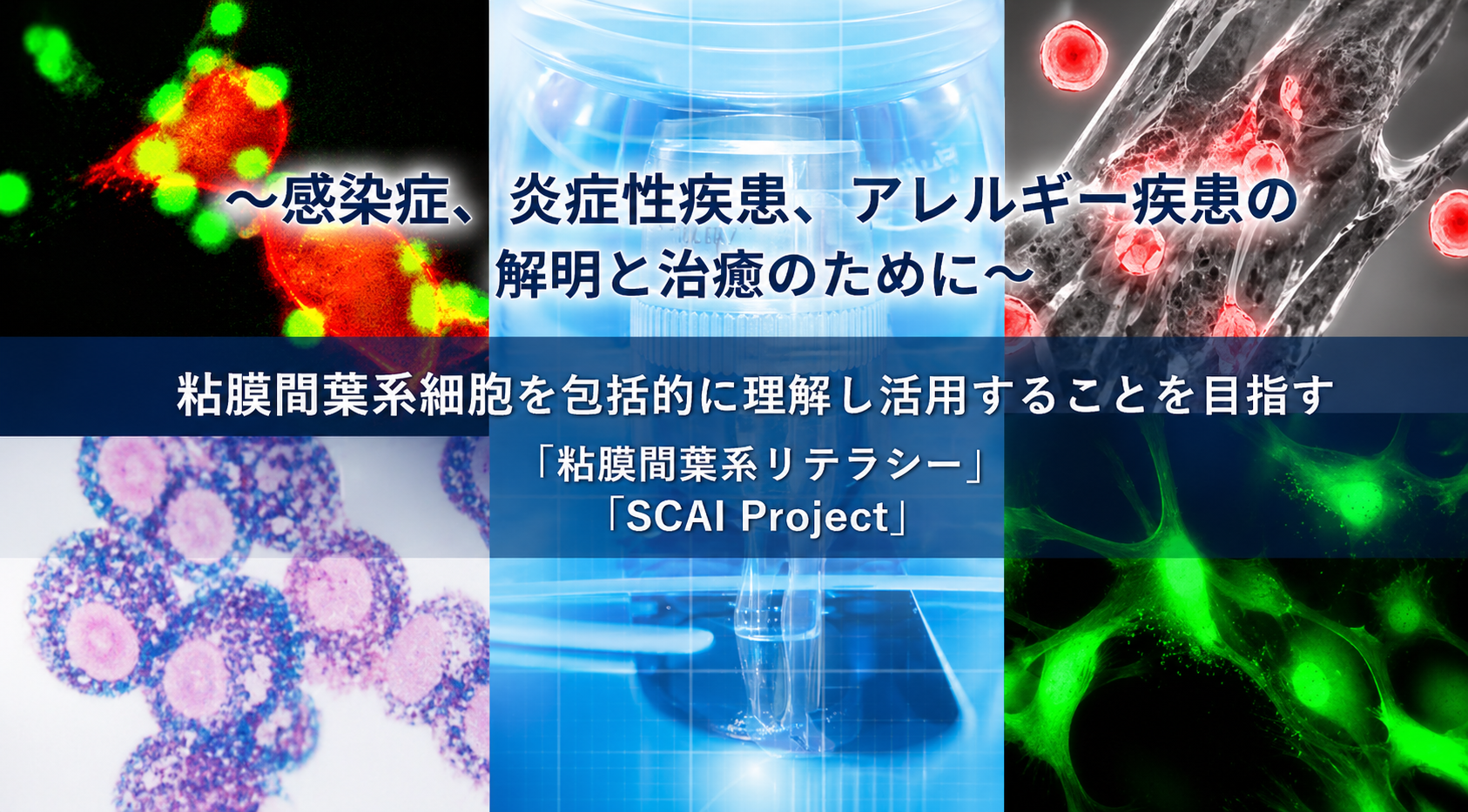
We have revealed that "mesenchymal cells (structural cells)," previously thought to simply support tissues, play a crucial role in imparting tissue- and organ-specificity to immune cells and are deeply involved in mucosal barrier function, tissue repair, fibrosis, and inflammation regulation.
Building on our “Mucosal Mesenchymal Literacy Study” (a project adopted under the Ministry of Education, Culture, Sports, Science and Technology’s Excellent Young Researcher Program), we are now advancing the SCAI project—“Structural Cells/Affect・Ameliorate/Immunity・Infection・Inflammation”
Structural cells exhibit diverse functions such as (1) “peripheral education” of the immune system, and (2) regulation of epithelial differentiation—“backline support for the mucosal barrier.” At the same time, functional transitions in structural cells can lead to (3) “fibrosis” or carcinogenesis, resulting in organ failure.
One of the themes of the SCAI project is the study of mesenchymal–neural interactions as the starting point of mucosal repair and fibrosis. This research is conducted on the foundation of the AMED Advanced Research & Development Program for Medical Innovation, “Understanding Life Phenomena and Creating Medical Technology Seeds through Spatiotemporal Analysis of Tissue Adaptation and Repair Mechanisms,” with a focus on bridging fundamental research to societal implementation.
Based on this research theme, we have organized public symposia at the Annual Meeting of the Molecular Biology Society of Japan as follows:
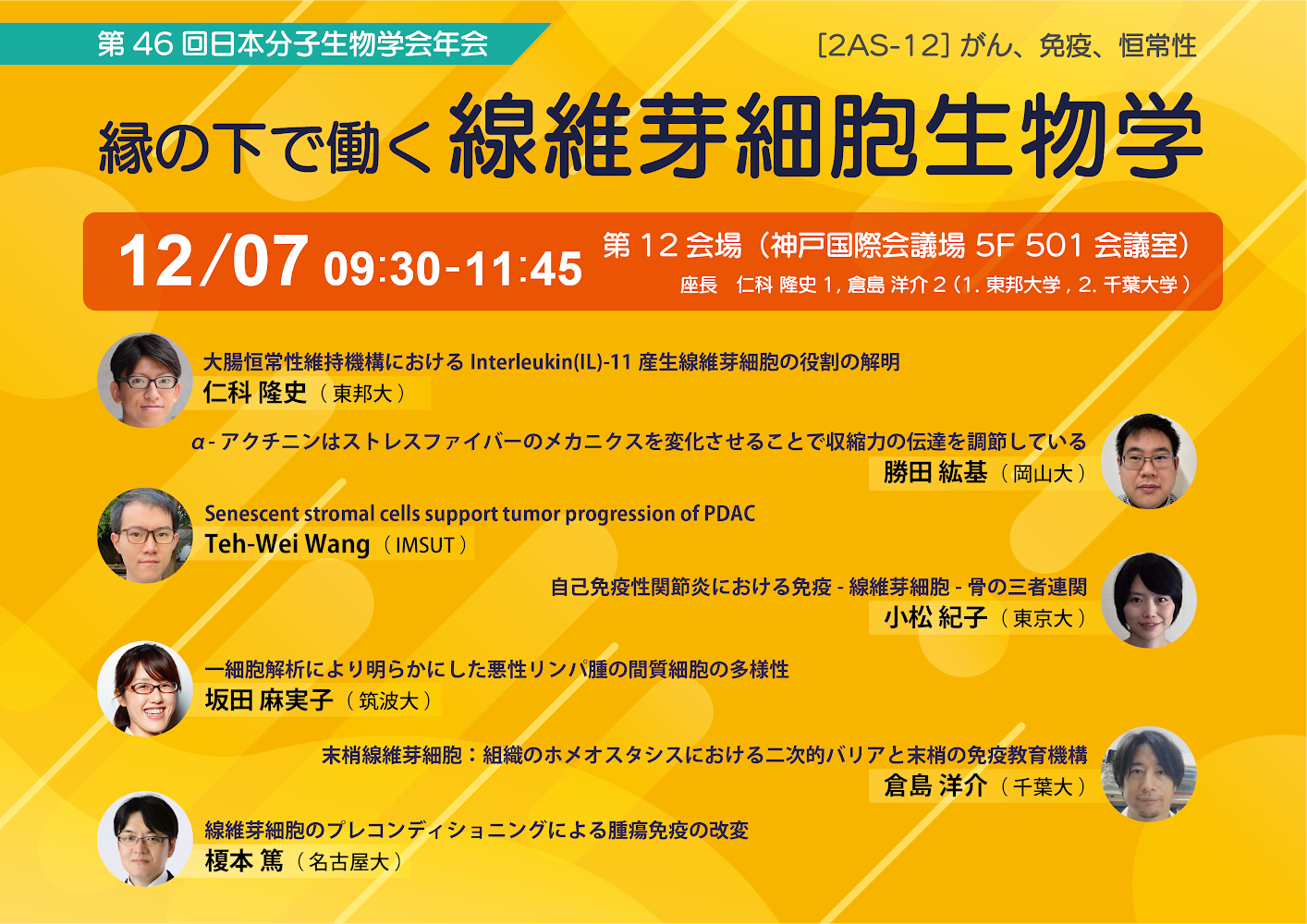
- 2023: Cancer, Immunity, and Homeostasis: The Underappreciated Biology of Fibroblasts
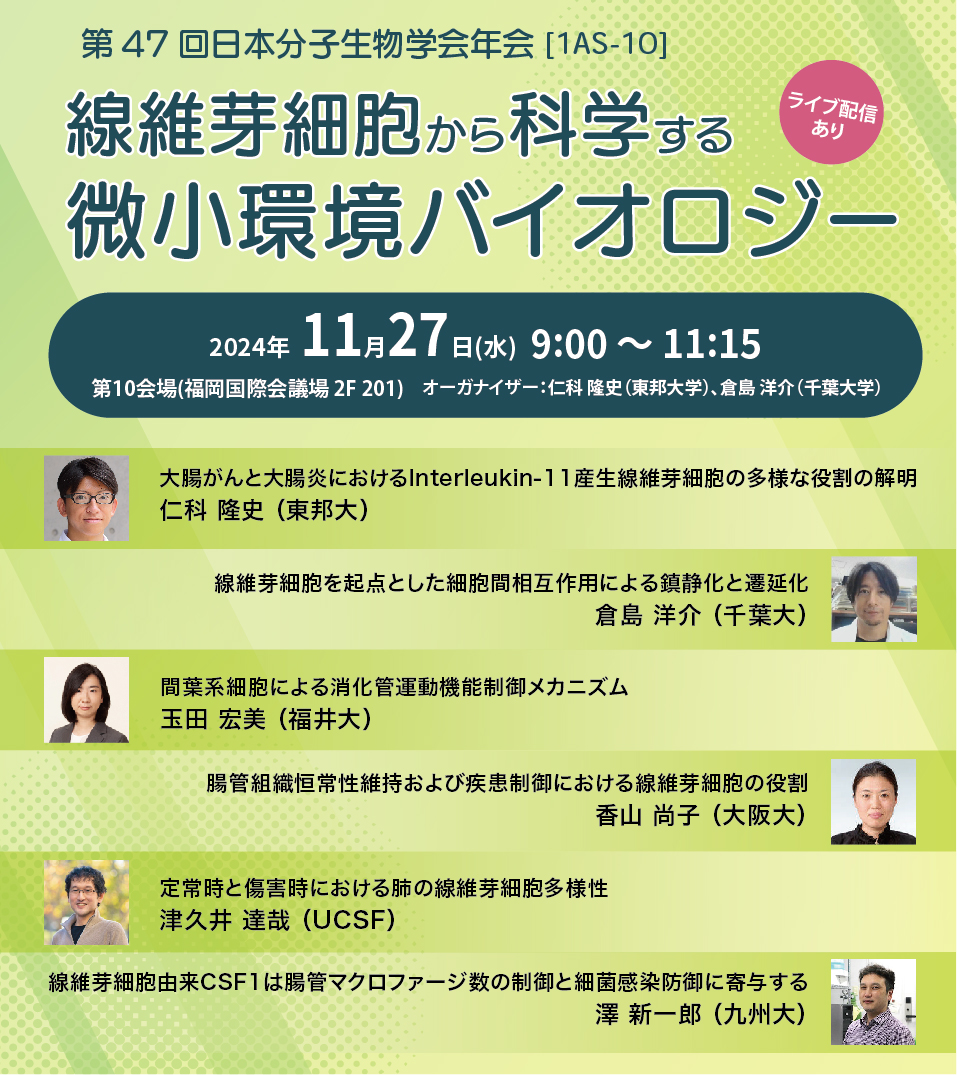
- 2024: Microenvironmental Biology Through the Lens of Fibroblasts
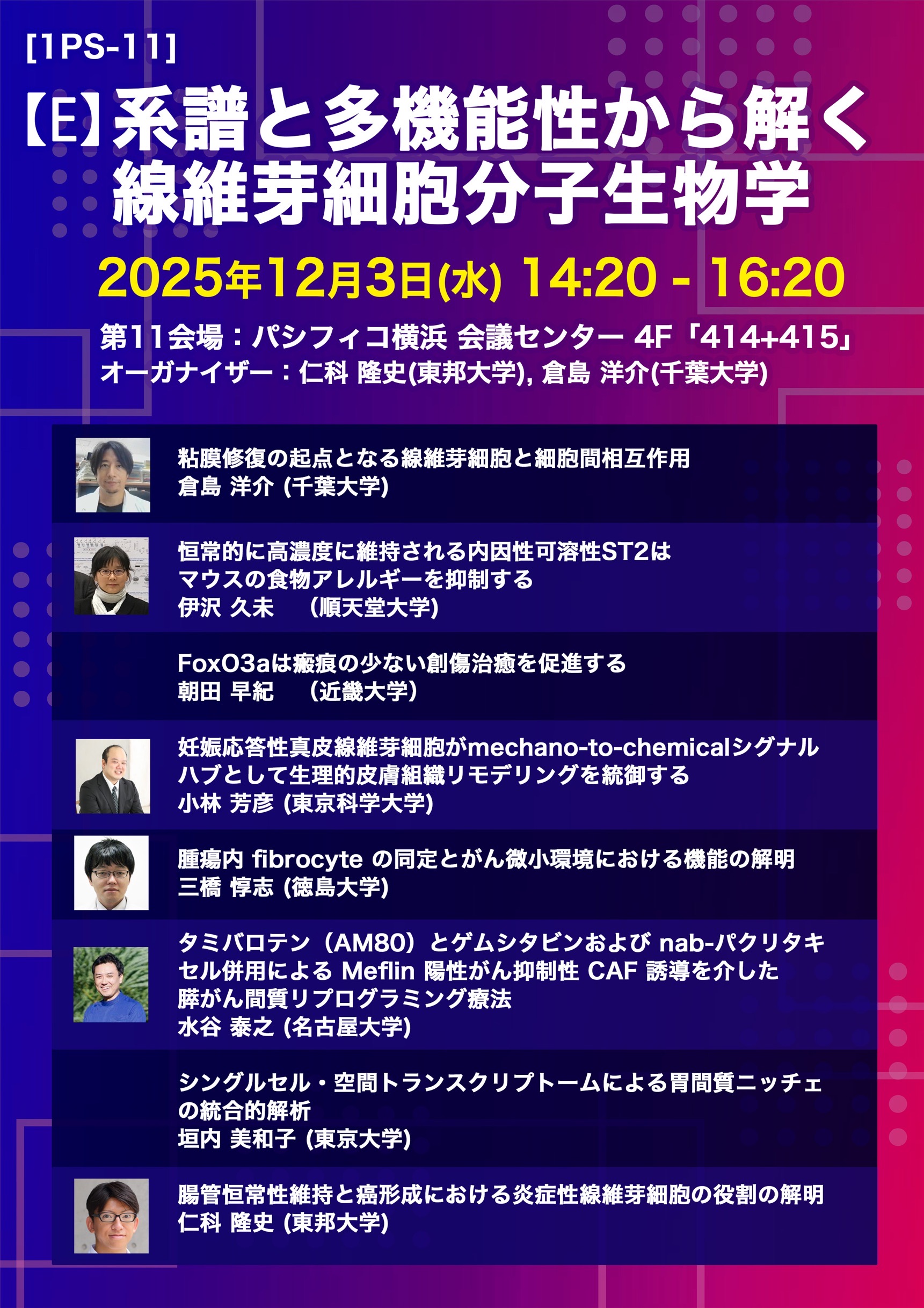
- 2025: Fibroblast Molecular Biology Unraveled by Lineage and Functional Diversity
- 2026: An Integrated Understanding of Interstitial Cell Dynamics Across Organs: From Development to Disease